Some births feel quiet and ordinary. Ayla Summer Mucha’s arrival in December 2021 was anything but ordinary. From the second she entered the world during a scheduled C-section, the energy in the delivery room shifted. Her parents, Cristina Vercher and Blaize Mucha, were young, hopeful, and ready to meet their baby girl. They expected tears, noise, and the familiar chaos of a hospital birth.
Instead, they got silence.
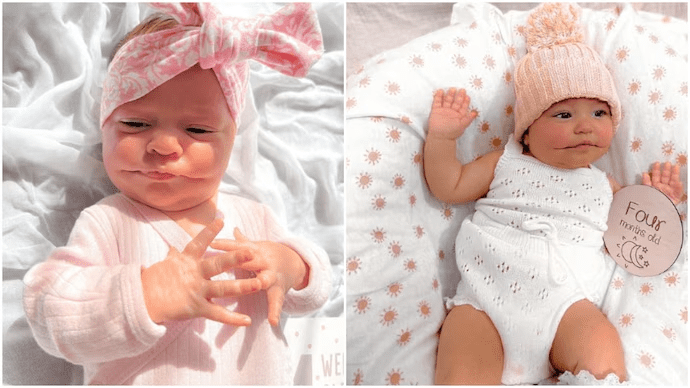
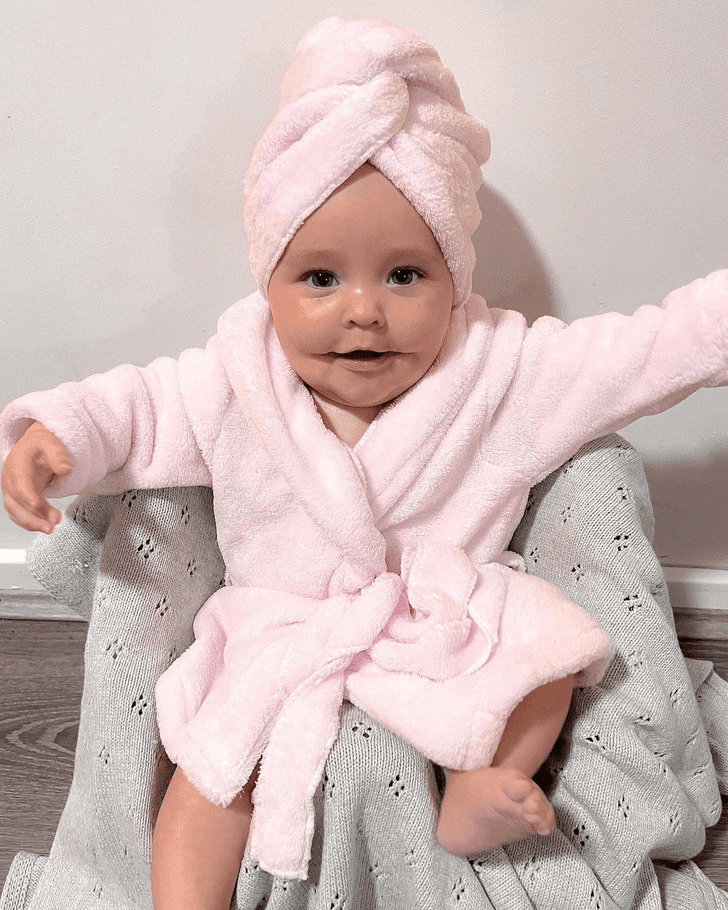
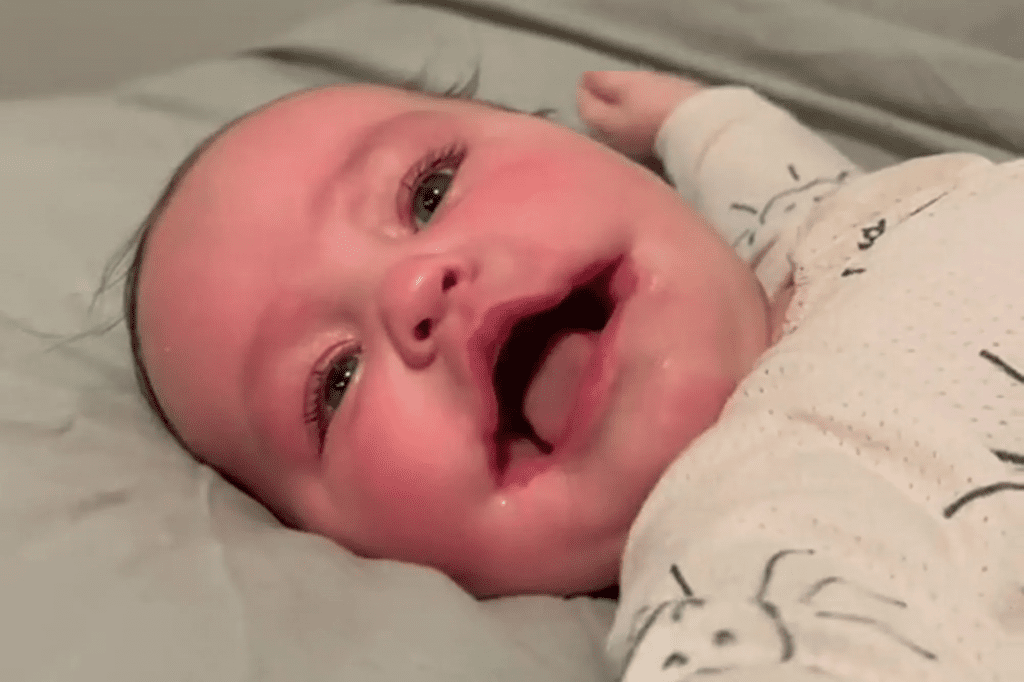
When Ayla was lifted up for the first time, she wasn’t crying in the way everyone imagined. She was… smiling. Not the faint, fluttering expression newborns sometimes make, but a wide, unforgettable, almost surreal smile. Her mouth stretched far wider than usual, reaching toward her cheeks in a way no one in that room had ever seen before.
Video: This baby girl was born with a ‘permanent smile,’ and the reason will melt your heart
For a moment, time seemed to freeze. No one moved. No one spoke. The joy in the room turned into stunned confusion.
Young Parents, Big Emotions, and No Warning Signs
Cristina was just 21. Blaize was 20. They were at the very beginning of their adult lives, and yet they believed they were as ready as they could be to become parents. Every appointment had gone smoothly. Every scan looked perfect. Doctors had never flagged anything unusual. There were no warning signs, no strange shadows in ultrasounds, no “we need to watch this” conversations.
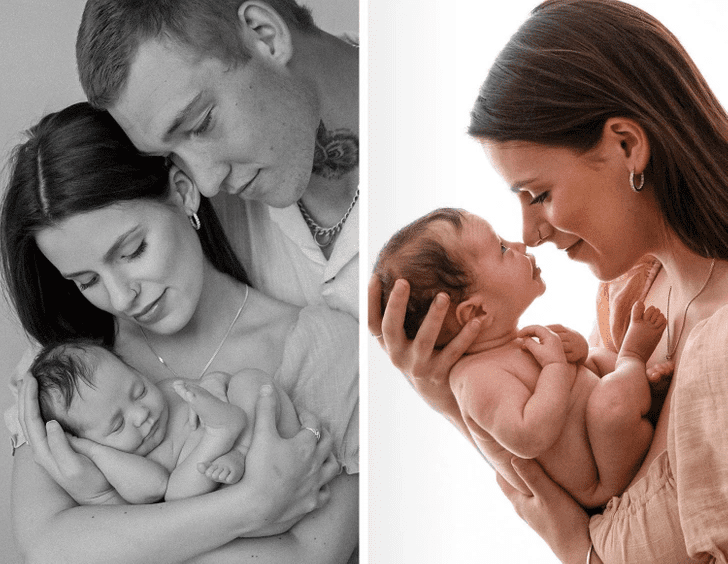
Everything about the pregnancy screamed normal.
So when Ayla arrived with a smile that looked different from any other newborn, the shock hit them like a wave. As doctors and nurses exchanged quiet glances, Cristina and Blaize instantly knew something was happening — they just didn’t know what.
When the Room Turned From Celebration to Concern
Instead of laughter and cheers, the room filled with uncertainty. Medical staff moved carefully, speaking in hushed tones. Cristina, still on the operating table, could feel the energy change. Blaize, standing nearby, watched every movement with growing tension.
No one had immediate answers.
It took hours of observation, examinations, and specialist input before the medical team finally arrived at a name for what they were seeing: bilateral macrostomia. In simple terms, it’s an extremely rare congenital facial cleft that occurs when the corners of the mouth don’t fuse correctly during early fetal development.
To put it in perspective, only around a dozen or so cases have been documented in medical literature worldwide. Most doctors will never see a single case in their entire careers.
No wonder the room had fallen silent.
A Diagnosis That Shook Their World
When Cristina and Blaize heard the diagnosis, their emotions crashed into each other — fear, sadness, disbelief, and a thousand questions all at once. How did this happen? Did they miss something? Could it have been prevented?
In those first hours and days, Cristina especially spiraled into a storm of self-blame. She replayed every choice, every meal, every moment of her pregnancy in her mind.
“Was it something I did?”
“Did I cause this?”
“Could I have stopped it somehow?”
Those kinds of questions can feel heavier than any medical chart. While doctors worked behind the scenes, consulting specialists and researching, Cristina and Blaize waited in a painful, anxious limbo, sitting beside their tiny daughter while their heads filled with worst-case scenarios.
Finally, after days of testing and expert review, the answers came — clear, firm, and desperately needed.
It Wasn’t Their Fault — And They Needed to Hear That
Specialists confirmed that Ayla’s condition was not caused by anything Cristina or Blaize did or didn’t do. It wasn’t linked to diet, lifestyle, environment, genetics, or habits. It wasn’t something they missed, and it wasn’t something they could have prevented.
It was a spontaneous developmental anomaly — rare, unpredictable, and completely out of their control.
Hearing that lifted a huge weight off their shoulders. The fear didn’t vanish overnight, but the guilt began to loosen its grip. They could finally look at their daughter and see her not through the lens of “What did we do wrong?” but through the lens of “What can we do for her now?”
More Than Appearance: The Real Challenges of Macrostomia
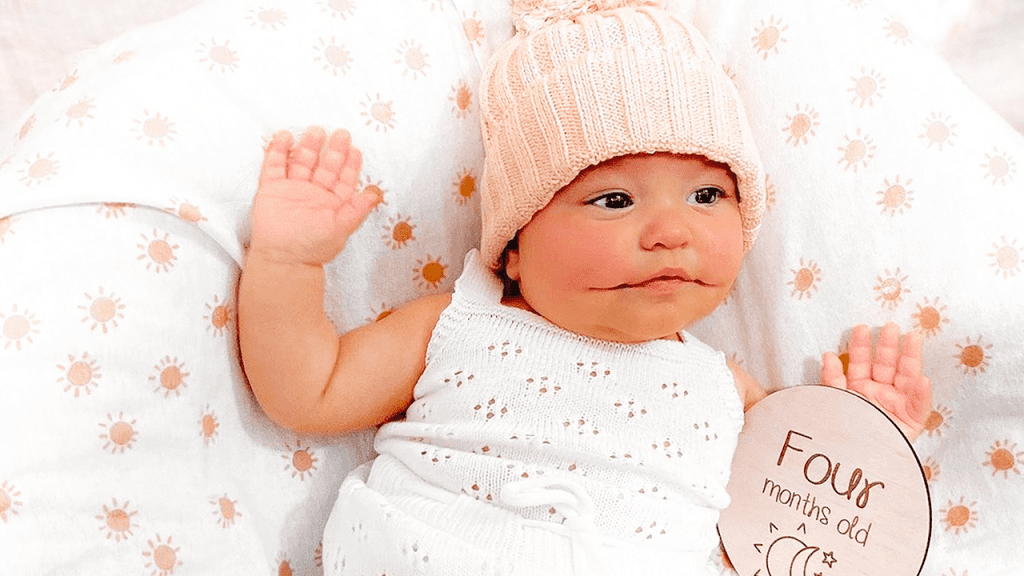
Bilateral macrostomia doesn’t just affect how a baby looks. It affects how they function. For a newborn like Ayla, that meant potential struggles with some of the most basic, essential skills:
feeding
suckling and latch strength
early jaw development
oral muscle control
speech formation later in life
overall facial symmetry and function
Feeding became one of the first and biggest hurdles. Instead of simply nursing or bottle-feeding like most newborns, Ayla needed tailored strategies and constant monitoring. Her parents had to learn quickly — what bottles worked, what positions helped, when to adjust, and how to support her when she struggled.
Even the doctors and nurses were learning alongside them, because the condition was so rare that no one had a standard “playbook” to lean on.
From Overwhelmed to Empowered Parents
Cristina and Blaize could have shut down under the pressure. Instead, something incredible happened — they stepped up. They became students of their daughter’s condition. They asked questions, took notes, researched, and advocated. They didn’t just watch the process; they actively joined it.
Hospital rooms that were supposed to be quiet spaces for bonding turned into mini-conference centers filled with surgeons, pediatricians, specialists, and genetic counselors. The language was technical. The decisions were heavy. And yet, through it all, their love for Ayla only grew stronger.
Every time Cristina looked at her daughter’s wide smile, she felt a mix of tenderness, fear, and awe. Ayla was tiny and fragile, but there was something undeniably powerful in her presence. Her expression, once a shock, slowly became a symbol — not of what was “wrong,” but of how unique and strong she truly was.
A New Routine, A New Perspective
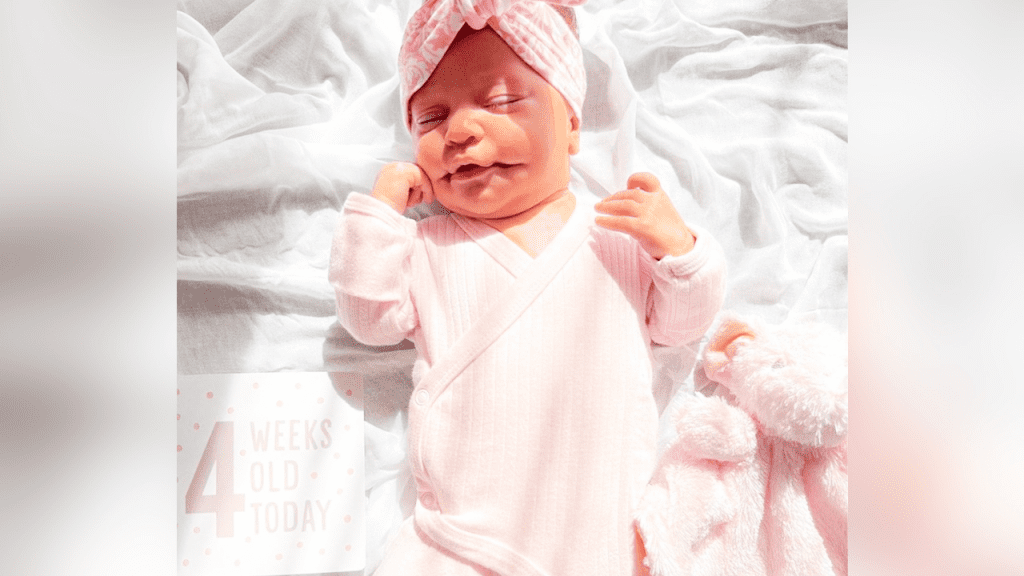
Once they went home, life didn’t magically become easy. The Mucha family had to create a new kind of normal. Their routine revolved around careful feeding, medical appointments, and constant adjustments. They celebrated small wins that many parents take for granted — a steady feeding, a restful sleep, a new reaction, a soft coo.
At the same time, they found moments of pure joy. Ayla’s radiant smile, the very thing that once filled the delivery room with confusion, now filled their home with warmth. She didn’t just enter a room; she transformed it.
Cristina spent hours watching her baby girl, memorizing the curve of her lips, the sparkle in her eyes, the way her whole face lit up when she reacted to the world around her. What had once been shocking now felt precious.
Sharing Ayla’s Story With the World
At some point, Cristina and Blaize made a decision that would alter the course of their journey: they chose to share Ayla’s story online. At first, their goal was simple. Maybe they could raise awareness. Maybe they could find even one other family going through something similar.
The internet responded in a way they never expected.
Videos of Ayla spread quickly. People weren’t mocking her. They weren’t recoiling. They were falling in love with her. Comments poured in from around the world, filled with kindness, encouragement, and admiration. Viewers saw what her parents saw — a beautiful, vibrant child with a luminous presence.
Her following grew into the millions. Ayla wasn’t just “the baby with a rare condition.” She became a symbol of resilience, joy, and the beauty of being different.
That outpouring of love didn’t just help Ayla — it healed her parents too. The isolation they once felt began to fade, replaced by community, connection, and strength.
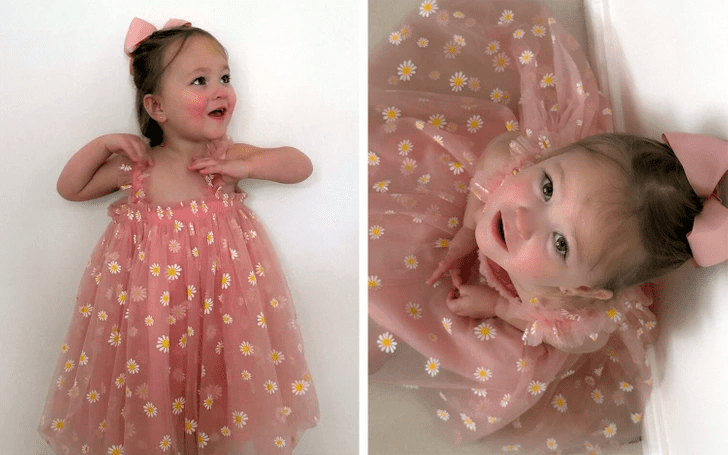
As Ayla grew, she hit milestones, explored her surroundings, and stepped into her own personality. Doctors eventually recommended corrective surgery to help with her long-term eating and oral development. It was a huge decision, but her parents approached it with informed confidence.
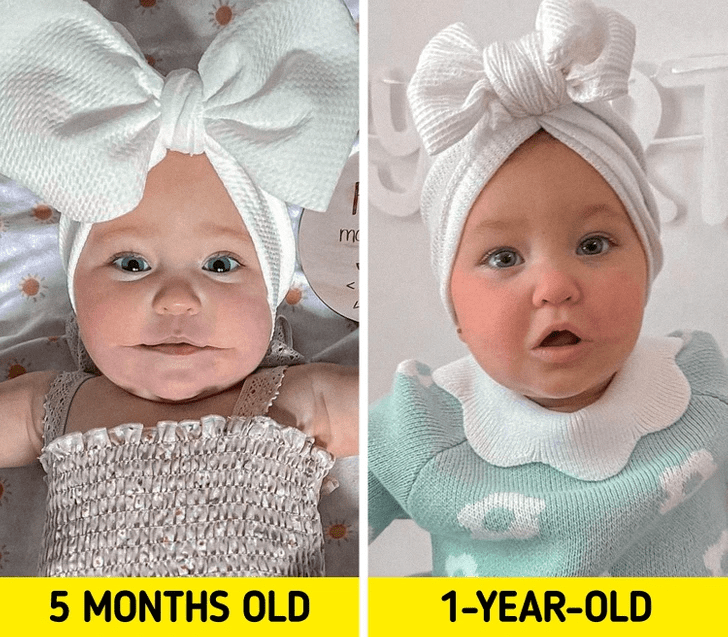
While not every detail of her medical journey has been shared publicly — as it should be — recent photos show a beautifully refined mouth structure with minimal scarring. Her smile looks different now, but her spark? That’s untouched. She still lights up every frame, every room, every heart.
In November 2023, Ayla became a big sister to her baby brother, Sonny. Watching her hold him, smile at him, and interact with him showed just how far she had come. The baby whose rare diagnosis once filled her parents with fear is now a loving, confident, joyful little girl surrounded by a world of support.
Today, Ayla’s story is bigger than a medical term with fewer than two dozen documented cases. It’s a story about courage, young parents finding their strength, and a little girl whose smile changed the way people see difference.
Cristina and Blaize walked into parenthood expecting a familiar path and instead found themselves in uncharted territory. But instead of breaking, they grew. They became advocates, storytellers, and protectors not just for their daughter, but for every child who doesn’t fit the “typical” mold.
Ayla didn’t just arrive differently. She arrived with a purpose — to remind the world that sometimes the most extraordinary beauty shows up in the most unexpected way. And every single day, she keeps living that purpose with one unforgettable smile.