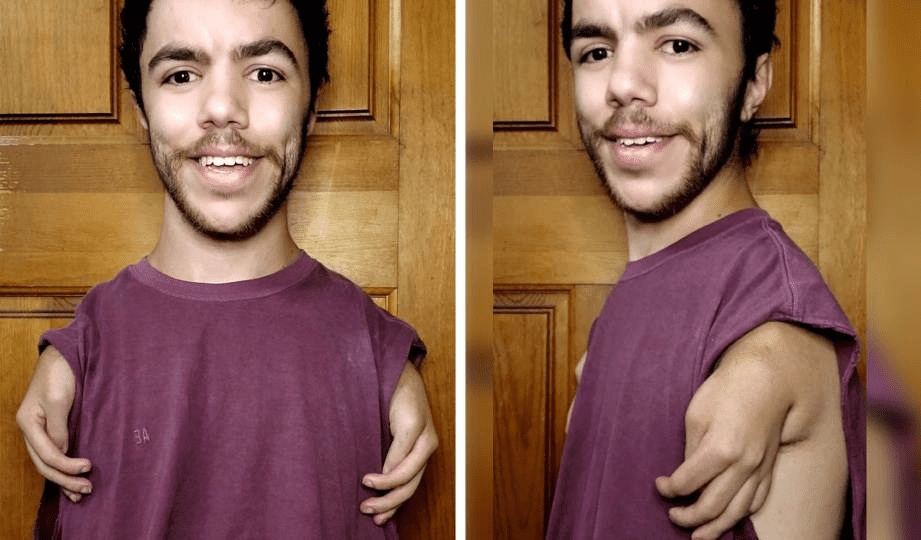
Most people spend their lives trying to fit into a shape the world already understands. We follow templates, chase approval, and hope that blending in will somehow make life easier. But every now and then, someone comes along who proves that the real power lies in doing the opposite. This is the story of Colby Van Voorhis, a young man who turned what made him different into the very thing that made him visible.
Colby is 24 years old and lives in Georgetown, New York. He was born with a rare genetic condition called thrombocytopenia absent radius syndrome, often referred to as TAR. The condition affects fewer than one in one hundred thousand births. In Colby’s case, it meant being born without arm bones and without knee joints. From the very beginning, his body followed a different design.
Standing at just over four feet tall, Colby learned early that life would not move along conventional lines. But instead of allowing that reality to shrink his world, he expanded it in his own way.
Growing Up With a Body That Breaks Expectations
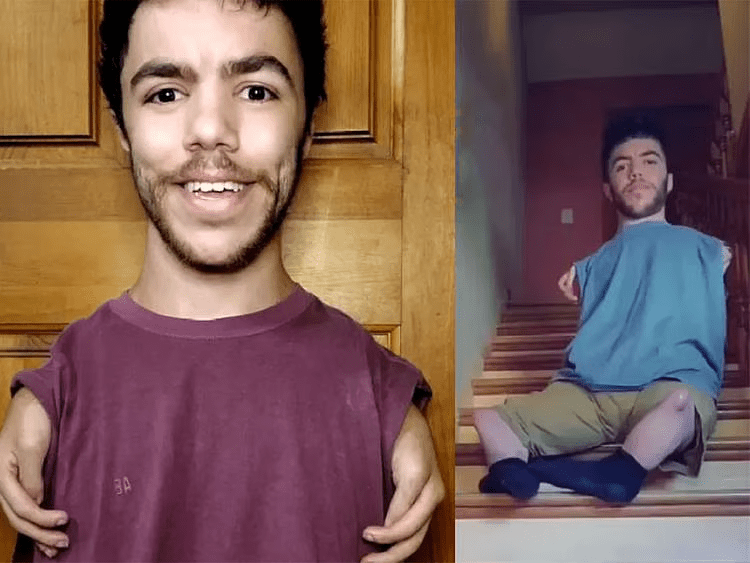
Living with TAR meant that everyday tasks required creativity and patience. Movements others performed automatically had to be learned differently. Independence did not arrive through ease, but through repetition and determination.
Growing up visibly different also meant dealing with attention. Some people were curious. Some were uncomfortable. Others were unkind. Colby experienced all of it. Over time, he realized something important. He could not control how people reacted to his body, but he could control how he responded to it.
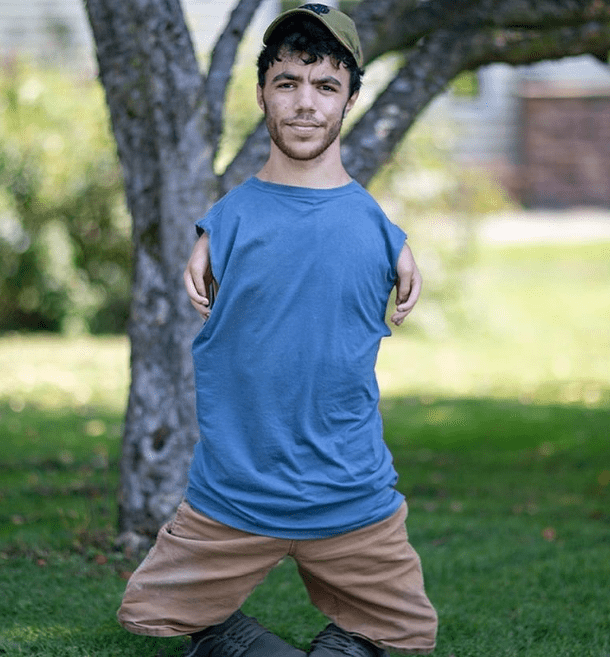
That realization shaped his confidence far more than anything physical ever could.
Refusing to Let a Diagnosis Define His Identity
Many people with rare conditions are spoken about more than they are spoken with. Labels are placed on them quickly, often without consent. Colby made a conscious decision not to let that happen to him.
Instead of seeing his condition as something that needed to be hidden or softened, he chose to acknowledge it openly. He embraced the parts of himself that others might find uncomfortable. In doing so, he removed their power.
Rather than asking the world for understanding, he showed up as himself and let people catch up.
Discovering a Voice Through Social Media
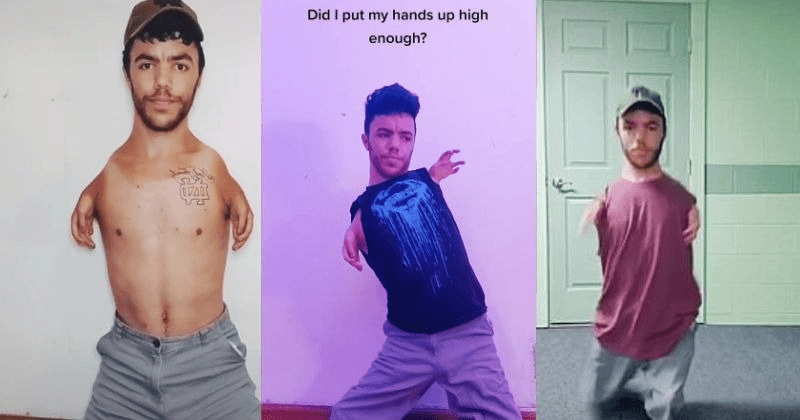
Colby did not join TikTok with the goal of becoming well known. He started posting videos simply to share moments from his life. Short clips. Casual jokes. Honest reactions. Nothing overly polished or rehearsed.
What people responded to was not the condition, but the personality. His humor landed because it was self-aware. His confidence felt natural rather than forced. Viewers stayed because he felt real.
Before long, his videos began to spread. One clip led to another, and another. His following grew rapidly, eventually surpassing two hundred thousand followers. Not because he asked for attention, but because authenticity tends to attract it.
Using Humor as Connection, Not Defense
Colby’s humor is one of the strongest parts of his presence. He does not use it to avoid reality. He uses it to invite people into it.
By joking openly about his life, he shifts the tone of the conversation. Awkwardness dissolves. Curiosity replaces discomfort. Laughter becomes a bridge rather than a barrier.
Instead of being spoken about, he speaks for himself. That difference matters.
Redefining Confidence on His Own Terms
Confidence is often portrayed as perfection. Straight lines. Smooth edges. No visible flaws. Colby challenges that image simply by existing comfortably in his own body.
His confidence shows up as ease. As acceptance. As a refusal to apologize for taking up space. He does not pretend life is effortless, but he also does not frame it as tragic.
He stands firmly in who he is, and that steadiness resonates with people who are tired of unrealistic standards.
Why Representation Like This Matters
For people living with rare conditions, visibility can be powerful. Seeing someone live openly and confidently reminds others that they are not alone and not limited to narrow definitions of success or happiness.
For everyone else, Colby’s presence challenges assumptions. It encourages a pause before judgment. A moment of reflection. A realization that strength and capability do not follow one visual template.
Sometimes representation does not need speeches or slogans. Sometimes it just needs honesty.
Turning Difference Into Direction
Colby did not wait for permission to embrace himself. He did not wait for the world to be ready. He moved forward with humor, openness, and consistency.
His rise online is not just about numbers or views. It is about choosing self acceptance and allowing that choice to create momentum. In a digital space filled with repetition, originality stands out naturally.
And Colby’s originality comes from living truthfully.
Colby Van Voorhis was born with a body that does not follow the standard rulebook. But instead of seeing that as something to correct, he made it part of his identity.
Through humor, confidence, and authenticity, he built a platform that proves difference does not need fixing. It needs room. Visibility. Respect.
His story is not about overcoming who he is. It is about owning it fully.
And in a world obsessed with fitting in, that may be the strongest statement of all.